Ohio: The Cuyahoga River
“The Cuyahoga River formed around 14,000 years ago as the Wisconsin Glacier receded north following the last ice age. It was accurately called “Ka-ih-ogh-ha” or “crooked” by local Native Americans, for its winding path that flows in a giant U-shape for more than 80 miles before emptying into Lake Erie.”
In 2025 I had the tremendous opportunity to partner with American Fly Fishing Magazine to highlight what I consider to be my “home river.” The Cuyahoga boasts a robust population of resident smallmouth bass and receives an influx of lake run smallies and steelhead during certain times of the year.
American Fly Fishing Magazine - Fall 2025
The Burning River - American Fly Fishing Magazine - Fall 2025
Crooked River
The Cuyahoga River formed around 14,000 years ago as the Wisconsin Glacier receded north following the last ice age. It was accurately called “Ka-ih-ogh-ha” or “crooked” by local Native Americans, who appeared in the Cuyahoga Valley around this same time, for its winding path that flows in a giant U-shape for more than 80 northern Ohio miles before emptying into Lake Erie. Draining over 800 square miles, it passes through the urban centers of Kent, Cuyahoga Falls, Peninsula, Independence, and Cleveland, but many miles of stream also flow through lush parklands. One such area is the Cuyahoga Valley National Park, which protects nearly a quarter of the river’s length, providing a scenic outdoor experience where anglers may cross paths with bald eagles, red tail hawks, great blue herons, wild turkeys, river otters, whitetail deer, turtles, and of course, fish.
Access
Access points are numerous, aided by the 101-mile Ohio & Erie Canal Towpath Trail that runs for many miles along the river. Traversing the Cuyahoga on foot, however, can be challenging due to steep and overgrown banks, deep pools, and soft bottoms. Wading requires pre-determined entry and exit points, as many of the steep banks are riddled with thick undergrowth. Even the best laid plans, though, can be literally washed away when previously navigable crossings are dug out by volatile flows, rendering them impassable. In fact, even modest rains can create significant changes in the contour and depth of the river, making it an ever-challenging fishery. The areas surrounding Peninsula are a great place to start, as access is plentiful and convenient.
The river has many faces, making it one of the more unique tributaries on the southern shores of Lake Erie. It’s larger than other nearby streams, with comparatively greater depth and width, and bottom content that shifts relentlessly between gravel, chunk rock, sand, and silt. Its winding path creates deep outer bends and the propensity for fallen wood to pile up. Indeed, there are piles of wood with footprints the size of your local McDonalds, with smaller deposits throughout its length. An angler can expect to lose a few flies on the submerged wood, but it’s a small price to pay for getting the fly in the zone.
Smallmouth Bass
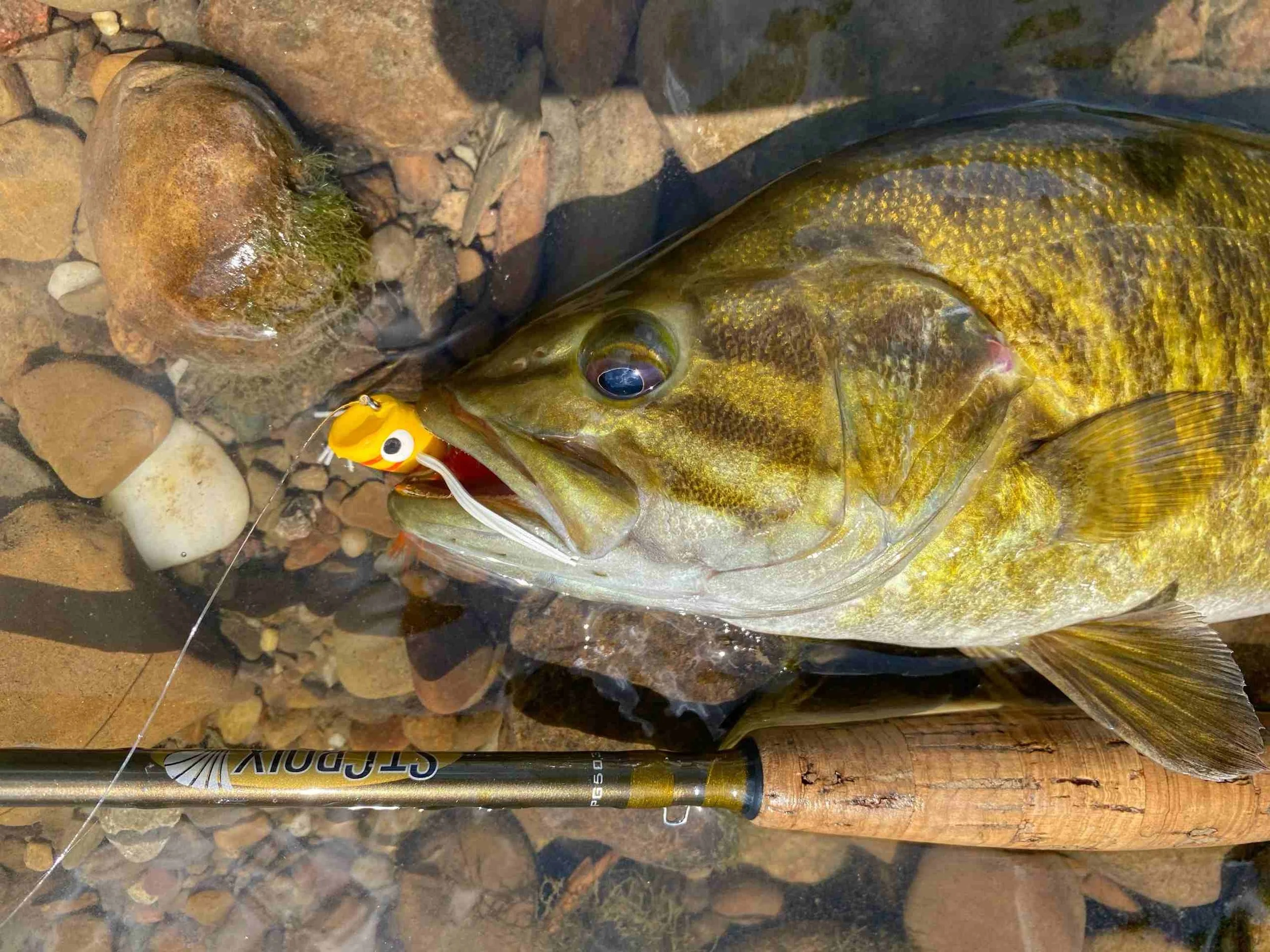
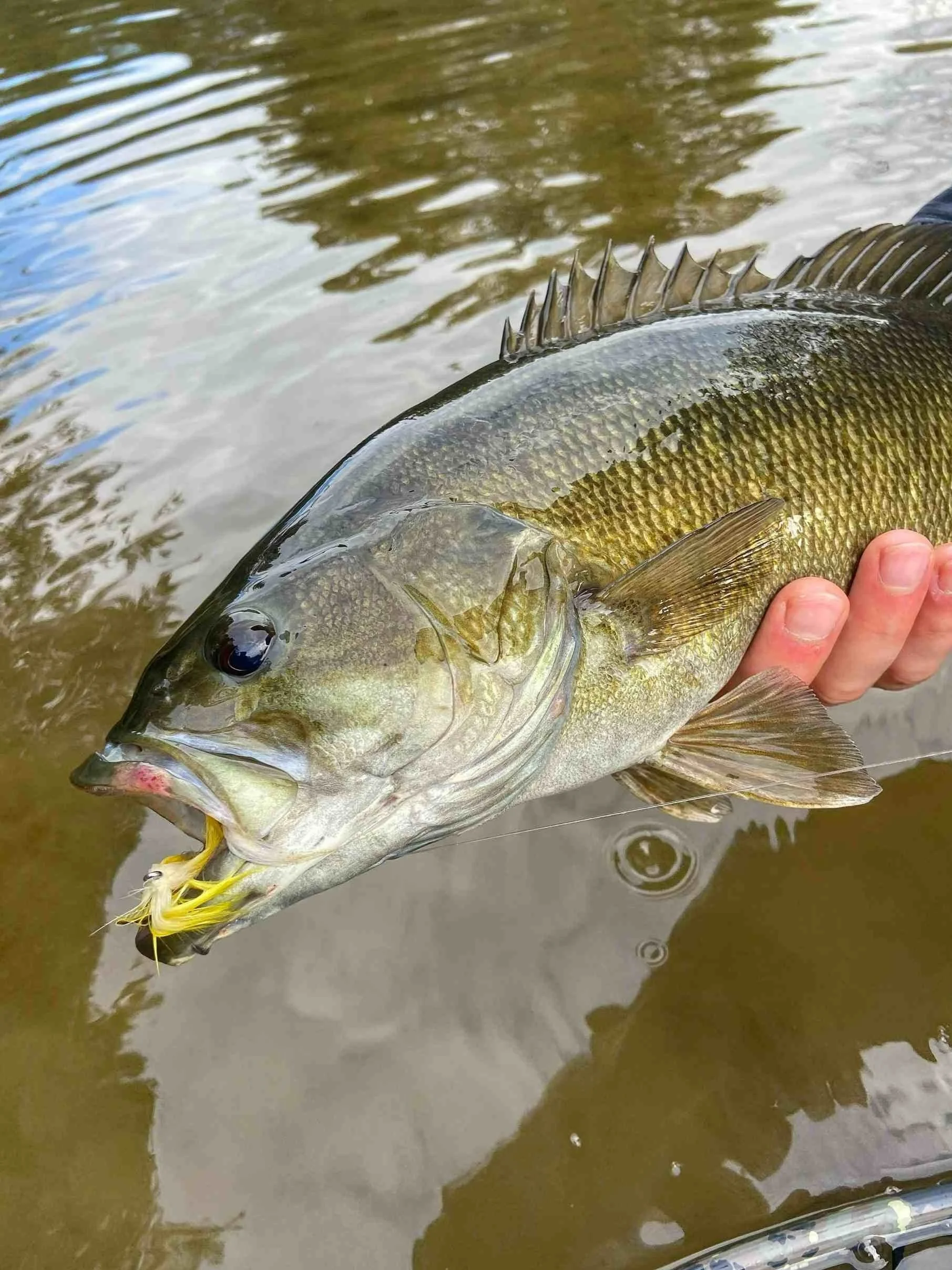
The Cuyahoga supports a variety of fish species headlined by smallmouth bass, steelhead, and northern pike, offering rich reward to anglers who learn the ins and outs of the “burning river.” A sizeable population of resident smallmouth bass extends throughout the river’s length with densities greatest in areas with rocky bottoms, increased depth, shade, and good flow. These native fish aggressively attack well-presented Circus Peanuts, Game Changers, Clouser Minnows, Near-Nuff Crays, and Zonkers, and they are strong, having spent their lives battling current. Most resident smallmouth run between 10 and 16 inches, with a handful of specimens pushing 20 inches. In springtime, the odds of hooking big fish increase as Lake Erie smallmouth enter the river to spawn. These lake-run fish only spend a few weeks in the river, typically during the months of April and May, but they average around 17 inches and crush three-to-five-inch baitfish and craw imitations with violence. Stripping streamers or poppers around mature wood, current seams, and eddies, and swinging craw imitations along the bottom are excellent methods of targeting smallmouth as well as the northern Pike, largemouth bass, freshwater drum, yellow perch, and rock bass which occasionally show themselves, providing an enjoyable mixed bag.
Great Lakes Steelhead
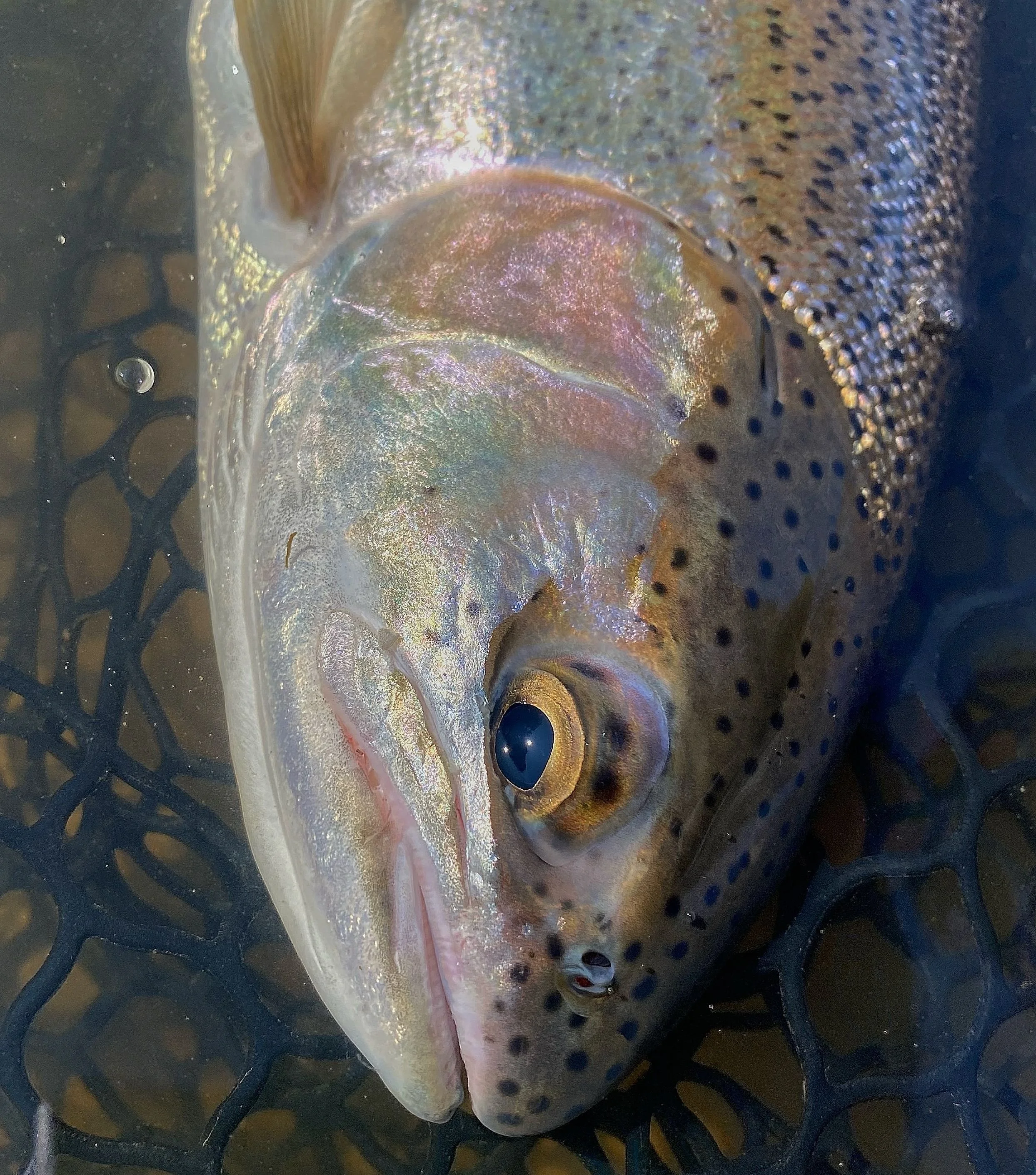
Typically overlooked by most anglers in favor of stocked tributaries throughout steelhead alley, the Cuyahoga has historically produced modest numbers of “stray” steelhead that wander in each season. Its days of flying under the radar are numbered, however, as the Ohio Department of Natural Resources stocked 10,000 steelhead smolts in the Cuyahoga River in April of 2024, with thousands more added in early 2025. Just how productive the Cuyahoga proves to be as a steelhead fishery remains to be seen, but it's safe to assume there will be plenty of fish around in the coming years. Steelhead generally inhabit the river between October and May with peak fishing in December and March. Great Lakes steelhead readily eat swung or stripped streamers year-round with increased activity when water temperatures exceed 40 degrees. Three-inch baitfish imitations with contrasting colors work well for all southern Lake Erie tributaries, and the Cuyahoga River is no exception. Most fly anglers, however, choose to drift eggs and nymphs tied on size 10 to 16 hooks and smaller streamers under indicators.
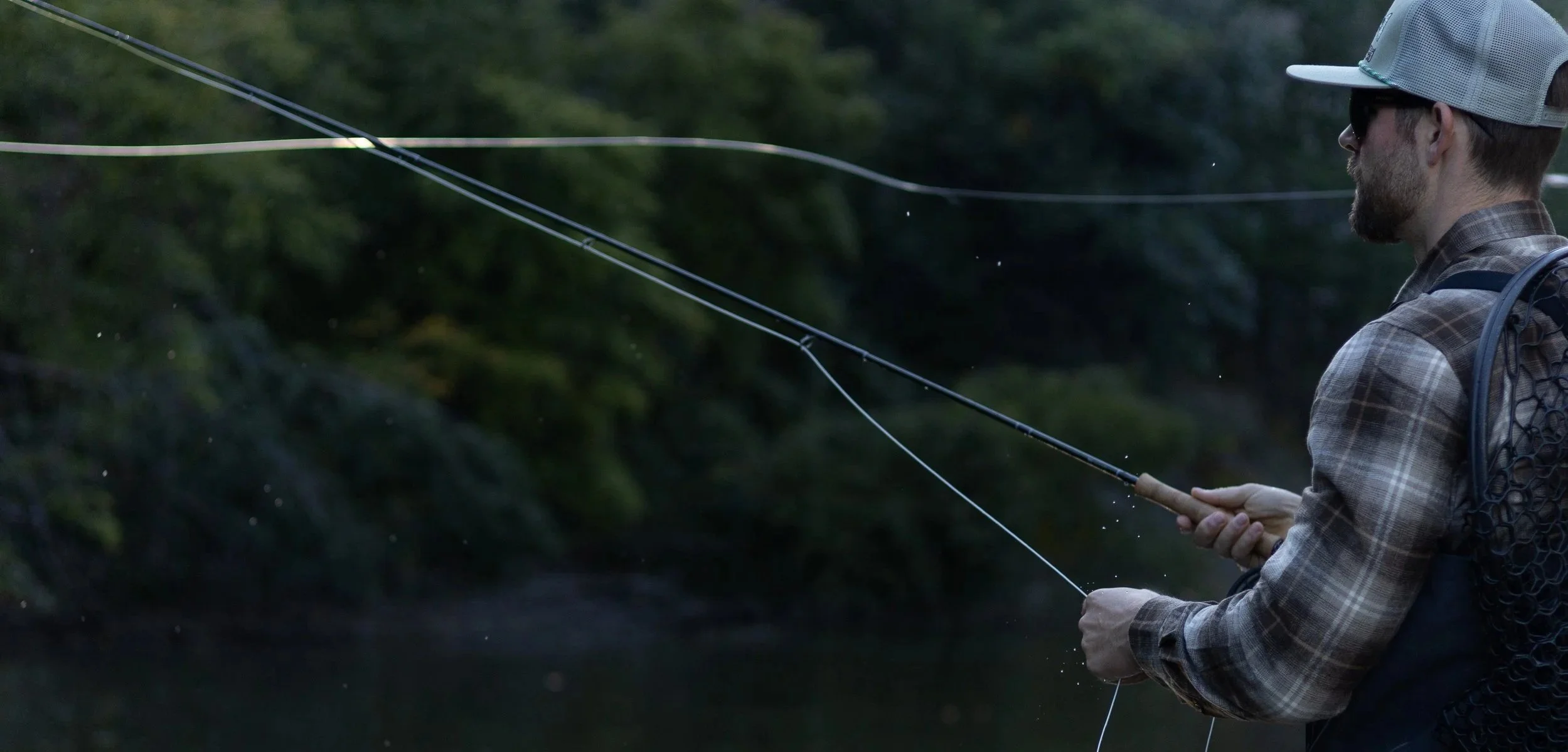
Six and seven-weight rods with floating or intermediate lines work well for smallmouth, but sizing up to 8-weight rods for lake-run smallmouth and steelhead is highly recommended. Overgrown banks and limited back casting space often make switch or trout spey rods ideal tools for wade anglers when paired with compact, floating skagit heads and sink tips in various densities. Anglers should carry flies in an assortment of color combinations as water clarity fluctuates with flows. White flies are never a bad option, as are chartreuse heads over white or black.
A River Reborn
The Cuyahoga River gained national fame (or shame) when it caught fire in 1969, helping lead to the passage of the Environmental Protection Agency’s Clean Water Act in 1972. In 1987 the river’s issues with erosion and poor water quality qualified it as an Area of Concern under the Great Lakes Water Quality Agreement, a pact involving the United States and Canada to restore and protect designated waters of the Great Lakes. A great deal of effort has since been made to mitigate pollutants, stabilize banks, and remove dams in order to return the Cuyahoga to its former glory, and it now flows more freely and with cleaner, more oxygenated water than it has in many years. With complete restoration remaining a work-in-progress, the efforts have produced some encouraging results. The river is full of life, and it provides worthwhile angling opportunities that defy its long-held, though well-earned, negative stigma.