Smallmouth Bass: Best Lines for Wade Fishing
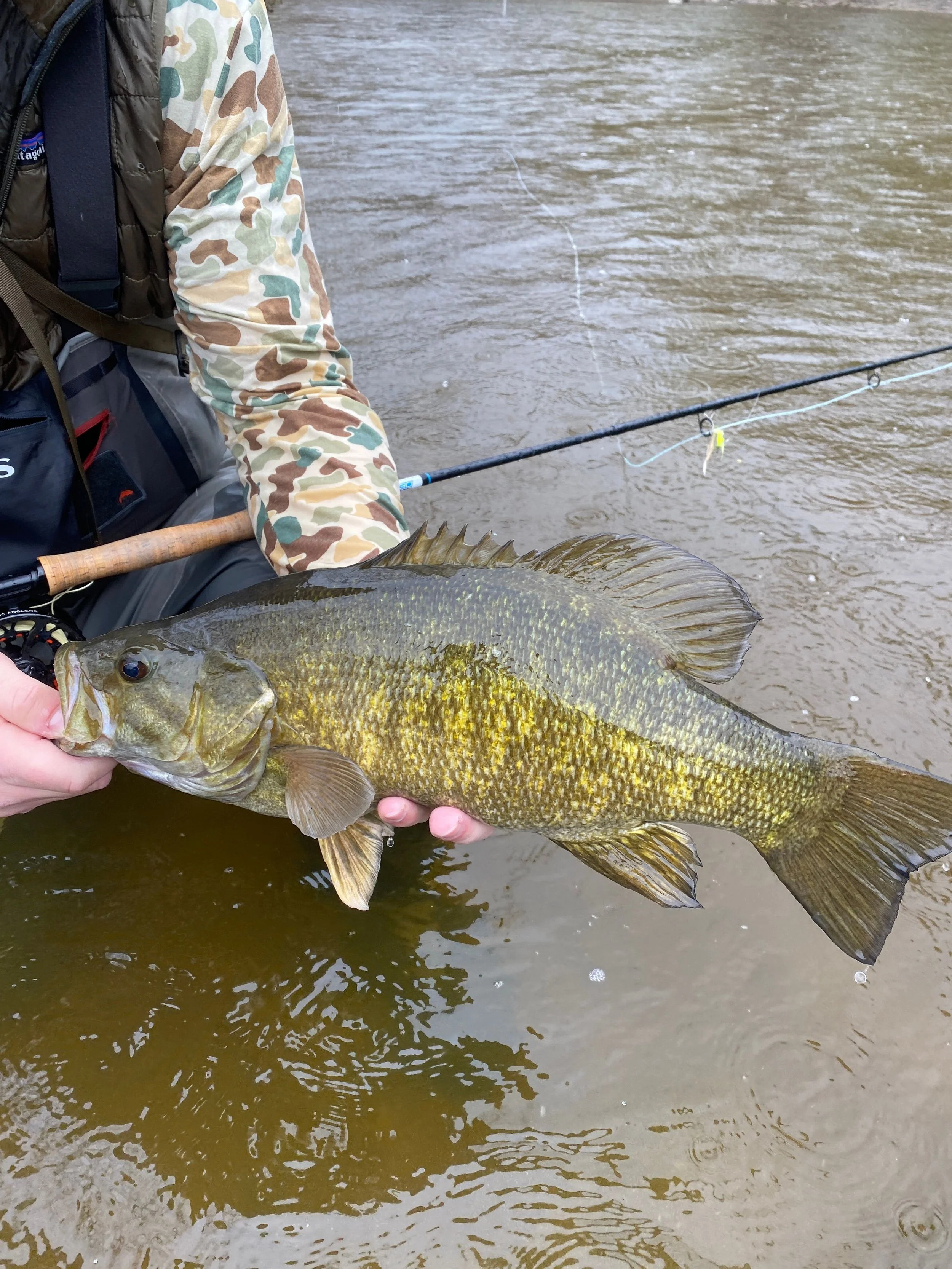
Two Lines for Wade Fishing Smallmouth Bass
Originally published in Fly Fisherman in May of 2026
Bass fishing often conjures images of tournament anglers perched on boat decks with a dozen rigged rods at their side. Indeed, every technique has its own setup, resulting in a staggering volume of bass-specific gear and tackle. The wading bass angler, however, must adopt a more minimalist mindset. When on foot, after all, one can only haul so much gear before it becomes a burden. As such, one rod, a small box or two of flies, some leader material, and a couple of lines are just about all that's manageable for those who tackle small and medium-sized rivers on foot. Less equipment, however, doesn’t necessitate less success. When cargo space is limited, we must economize, and carrying the right lines is especially important. In these scenarios, anglers would do well to bring two lines, one floating and one intermediate, to cover all of their needs in small river environments.
Floating Lines
As their name suggests, floating lines...well...float. They hover on the surface of the water, conferring distinct advantages to wade anglers in reference to line control and the types of flies they can present. Surface flies, for instance, are only effectively fished with a floating line that drags them across the water’s surface rather than below it. Poppers, frogs, mice, and finesse terrestrials like dragon and damsel flies should all be fished on floating lines with nylon or monofilament leaders. Topwater fishing is considered by many to be the most exciting way to target smallmouth bass. It’s explosive, highly visual, and only possible with a floating fly line.
Ironically, floating lines are often the best tools for bottom-oriented presentations as well. Crayfish patterns, for instance, are an absolute necessity for smallmouth anglers, and they represent a second category of flies that pair best with floating lines due to the mechanics of how they are fished. Fishing on foot means the angler is stationary (or nearly stationary) while presenting flies. In rivers, however, the water is constantly flowing, meaning all slow and moderate speed retrieves eventually devolve into swing or pseudo swing presentations. Thus, line control via mending is critical for controlling the depth and speed of the fly. Floating lines, especially those with long rear tapers, permit a high degree of line control as they are easily lifted off the water and mended.
Floating lines also enhance the action of crayfish patterns (or any jig flies) as they promote increased vertical displacement with each strip of the line. Lifting and dropping a fly, also called “jigging,” is a well-established smallmouth bass trigger that’s highly effective year-round. Where a stripped sinking line pulls the fly horizontally, a floating line picks it up and drops it – triggering savage strikes. Long, thin fluorocarbon leaders are best for crayfish flies as they sink quickly, and their reduced diameter is less impacted by current. Floating lines are also great for a variety of weighted streamers that are fished in the top third of the water column. Just about any fly with lead, brass, or tungsten will sink of its own accord, and can thus be effectively fished on a floating line. Clouser Minnows, one of the most successful bass patterns of all time, fishes best on floating lines in the relatively shallow waters of smaller rivers.
SA Bass Bug
A line’s density, however, is far from the only characteristic that should be considered. Other properties like taper, grain weight, head length, and composition will determine which floating line is best for your fishing. The Scientific Anglers Amplitude Textured Bass Bug line checks all the boxes. It is positively teeming with purpose-driven features that make it an excellent choice for wading smallmouth bass anglers. It’s an over-weighted line with SA’s AST slickness additive that loads rods quickly and shoots line with ease. Fast loading, shooting lines like the Bass Bug pay dividends for wade anglers who very often must navigate areas with steep banks, trees, and bushes with minimal back casting room. In these scenarios, making two quick false casts to get the head out of the tip are all that’s necessary before launching it back across the river. The line also sports a shooting texture running line to promote increased distance and a floating texture near the tip to enhance flotation, keeping flies atop the water’s surface film. Aside from its ability to navigate tight quarters, limiting false casting throughout the course of the day also mitigates fatigue, and often improves accuracy as a result. Accurate casting, of course, is paramount for maximizing the relatively small amount of water that wade anglers cover.
The Bass Bug line is built with a short, five-foot front taper that effortlessly turns over the large and wind-resistant flies that bass junkies love to throw. Big, articulated, and often weighted flies like the uber-popular Circus Peanut are no problem for the Bass Bug’s heavy head and short front taper. The line is also built with a warm-weather coating that helps it maintain its properties in the heat. Being that it's over-weighted by two line sizes, anglers may wish to downsize the line in low and clear water or conditions that call for more subtle presentations.
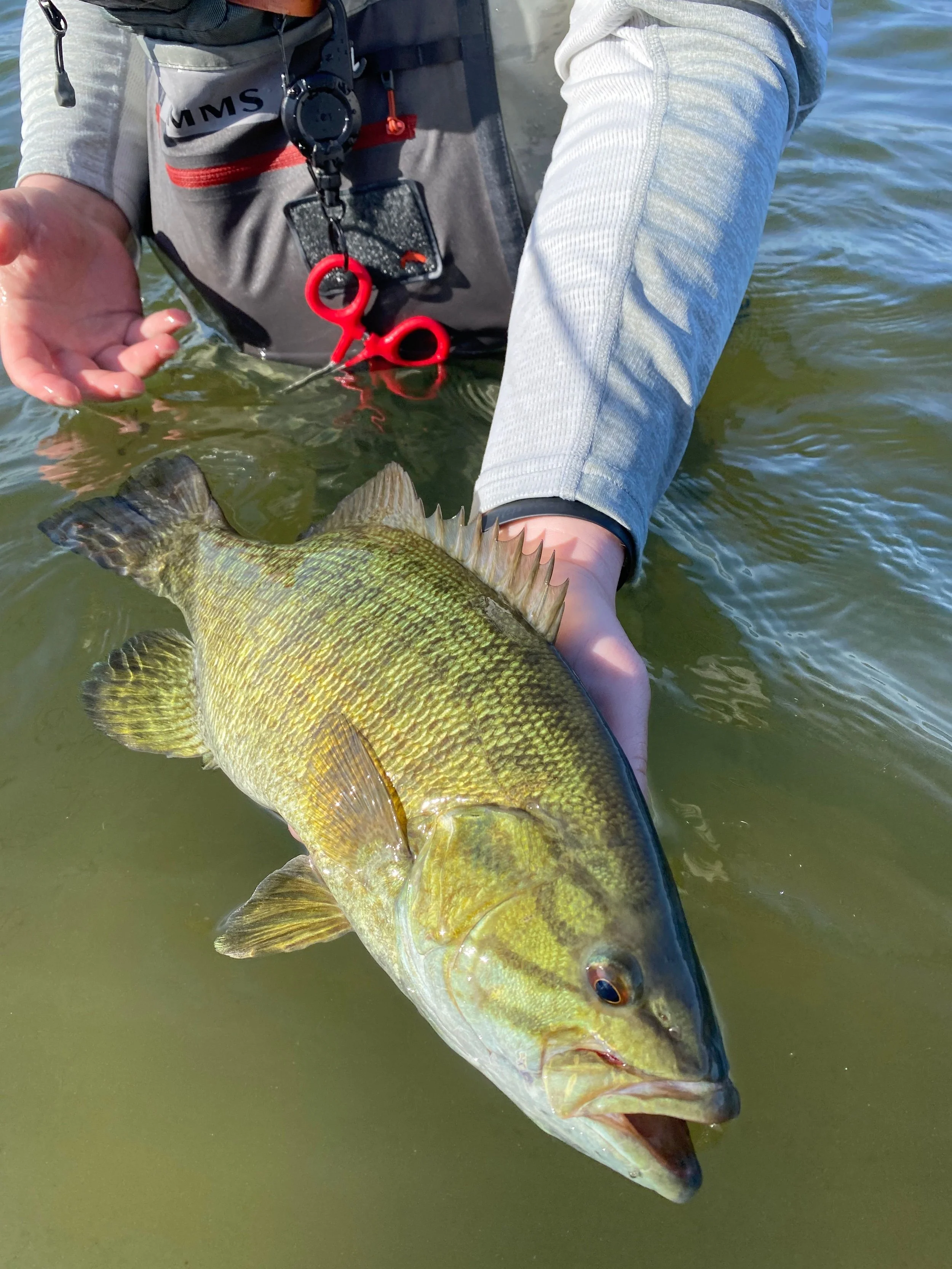
Intermediate Lines
Intermediate lines are a second type of fly line that no wading smallmouth angler should fish without. These slow-sinking lines are built to drop at a rate narrowly exceeding one inch per second, offering a unique set of benefits and significant value to anglers on foot. Sinking lines are critical for many smallmouth flies and presentations as they operate below the water’s surface, thereby avoiding the river’s strongest current. This may seem like a small consideration, but the difference in fishability can be rather dramatic, especially in areas of faster water, where floating lines are quickly swept downstream by the speedy surface current. Super dense, fast-sinking lines, however, are problematic in the shallow waters of smaller rivers as they drag flies to the bottom during all but the very fastest retrieves. Intermediates quickly break the surface but sink very slowly, allowing flies to be fished more methodically in the middle-third of the water column.
Intermediates deliver streamers to adequate depth more easily than floating lines, and they keep them in the zone much longer than fast-sinking options. They also allow anglers to fish a vast array of unweighted and lightly-weighted flies that rely solely on intermediate lines to achieve requisite depth. Hugely popular swim flies like Feather Gamechangers and Swinging D’s, for instance, are out of play for anglers armed only with floating lines, as it takes an intermediate to pull these fish magnets into position. Jerk flies, which slash and pause, are also best fished on intermediates. Smallmouth bass are often suckers for paused and twitched flies that hover and hang, suspended mid-column. Unweighted flies fished on intermediate lines can achieve this effect with ease.
Full intermediate lines, while endowed with the aforementioned positive characteristics, are not ideal tools for wade anglers because they easily tangle. Stripping flies inevitably results in a pile of running line next to the angler, which, if it sinks, often tangles around boots and submerged snags. This is especially problematic when the angler is standing in an eddy, which pushes the pile of running line into his or her legs. To alleviate this issue, wading smallmouth anglers should choose a dual-density line that is comprised of a floating running line and an intermediate head or tip.
SA Sonar Tropical Clear Tip
The Sonar Titan Tropical / Jungle Clear Tip line from Scientific Anglers is packed with wade-friendly features that make it an excellent choice for trudging smallmouth anglers. It's a dual-density line that offers the “best of both worlds,” with an intermediate head that sinks at a rate of 1.25 inches per second and a floating running line that mitigates tangles. This makes the line a dream to use while traversing smaller rivers on foot.
Although smallmouth bass enjoy a reputation for being aggressive eaters, they can become picky and skittish under certain conditions. As such, stealth is an important consideration for anglers, and the Tropical Clear Tip line, with its 15-foot clear tip section, becomes an asset in these situations. Clear lines aren’t always absolutely necessary, but they never hurt and can make a real difference in low and clear water environments where bright fly lines may spook fish. The clear tip section also allows anglers to use shorter leaders and thus maintain a more direct connection to their fly. Shorter leaders cast more easily and keep flies closer to the tip of the fly line, making sink rates more predictable and snags easier to avoid.
Like the Bass Bug line, it loads quickly, a function of its over-weighted, short head, and turns over big flies with ease thanks to an aggressive front taper. The Tropical / Jungle Clear Tip line, however, utilizes the tried and true “Titan Taper,” which has been incorporated into a wide variety of SA lines for many types of species and situations. This makes it quick and easy to shoot accurate, long-distance casts even with large or heavy flies.
Walk and Wade With Confidence
There’s just something special about wade fishing. Standing in a river and feeling the pulse of the water against your waders brings a sense of serenity that most other forms of fishing cannot. You’re immersed in the experience. You notice subtle behaviors in wildlife that can aid your fishing or simply heighten the overall experience of being out in the natural world. Wading allows us to become a part of the system, with very real limitations and physical demands that are humbling and challenging. Presenting flies in moving water, however, requires skill and the right tools. Floating and intermediate fly lines are the right tools for the job for smallmouth anglers wading smaller rivers.