Silver and Bronze
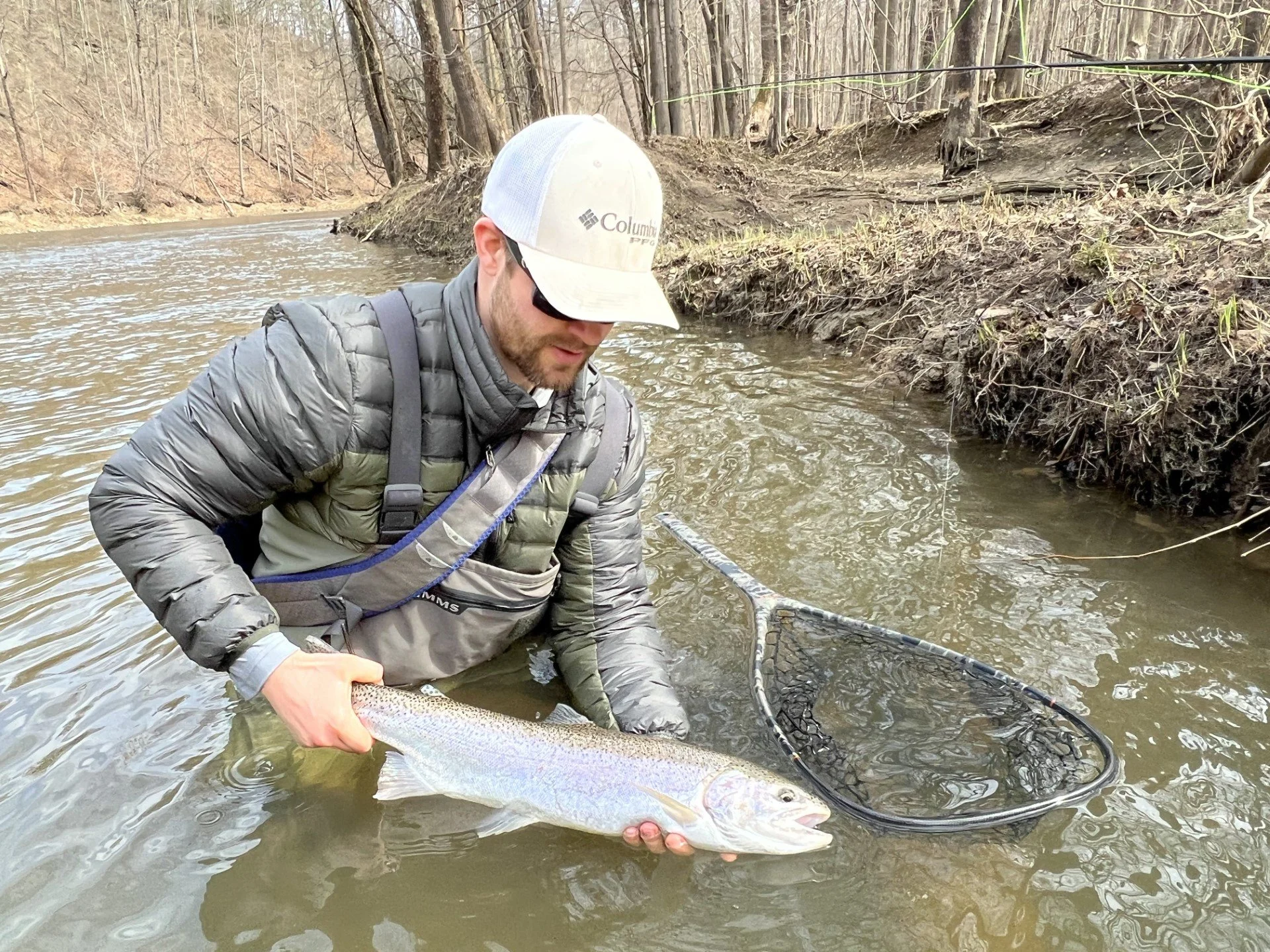
Silver and Bronze
Targeting Steelhead and Migratory Smallmouth Bass in Lake Erie Tributaries
Originally Published by Flyfisherman Magazine in March 2024
Standing in moving water. Where else would you rather be on a crisp April morning in Steelhead Alley? You launch a double spey cast down and across before making a large upstream mend. Slowly you lower the rod tip, mend again to the middle of the river, and feel for signs of life. The fly is in the “zone” as they say, and you can almost predict when a take will occur by the speed of your Skagit head and the tension on the running line in your hand. Then it happens. A sharp pull on the fly kicks off a tug-of-war with a monster. The fight, however, feels different. The fish is heavy, like a steelhead, but it doesn’t make screaming runs. It dives deep and shakes its head back and forth before it explodes upwards, breaks the surface, and you see 21 inches of angry bronze furiously contorting, suspended above the surface of the river. You’ve connected with a lake-run smallmouth bass. After landing, admiring, and releasing the giant, you catch your breath and make another cast. It also connects, but this time with a chrome-bright steelhead that hauls downstream so fast you’re into your backing before you know what’s happening. Days like this are why we fish, and they are possible each spring in the famed steelhead alley.
Steelhead
The Great Lakes and their connecting waters boast some of the finest freshwater fishing in the United States. These inland oceans provide year-round angling opportunities for a wide variety of feather-eating species. Lake Erie, the shallowest and warmest of the Great Lakes, supports incredible biodiversity, drawing anglers from far and wide. This world-class walleye fishery also receives deserved attention for its trophy-sized smallmouth bass and stocked migratory rainbow trout.
The big trout, commonly referred to (correctly or not) as “steelhead,” have become so popular that a swath of land on Erie’s southern shoreline has been dubbed “steelhead alley.” This area, rife with tributaries, runs from Ohio’s Vermilion River, east through the mile creeks of Pennsylvania, all the way to Cattaraugus Creek in New York. Droves of fisherman descend on the alley from September through April, and for good reason. These stocked trout average over 5 pounds and make knuckle-busting runs and acrobatic leaps. They run up the alley tributaries in waves, triggered by rainfall and water temperatures.
By late April most steelhead are dropping back to the lake, having completed their spawning mission, and will typically vacate the tributaries by mid-May. Precipitation and cold snaps will still draw fresh fish into the lower rivers, however, where they mix with the dropbacks. Both are willing eaters, with dropbacks being notoriously voracious feeders and fresh fish still programmed to chase bait as they do in the lake. As the water warms, steelhead gravitate to faster, more oxygenated water and feed actively. Broken surfaces created by fast water moving over stones, especially at the heads of runs, serve as cover for wary fish, and swinging flies through these zones can be worthwhile. Swung flies and slow, swing-like retrieves that allow the current to heavily influence the fly are great ways to attract steelhead.
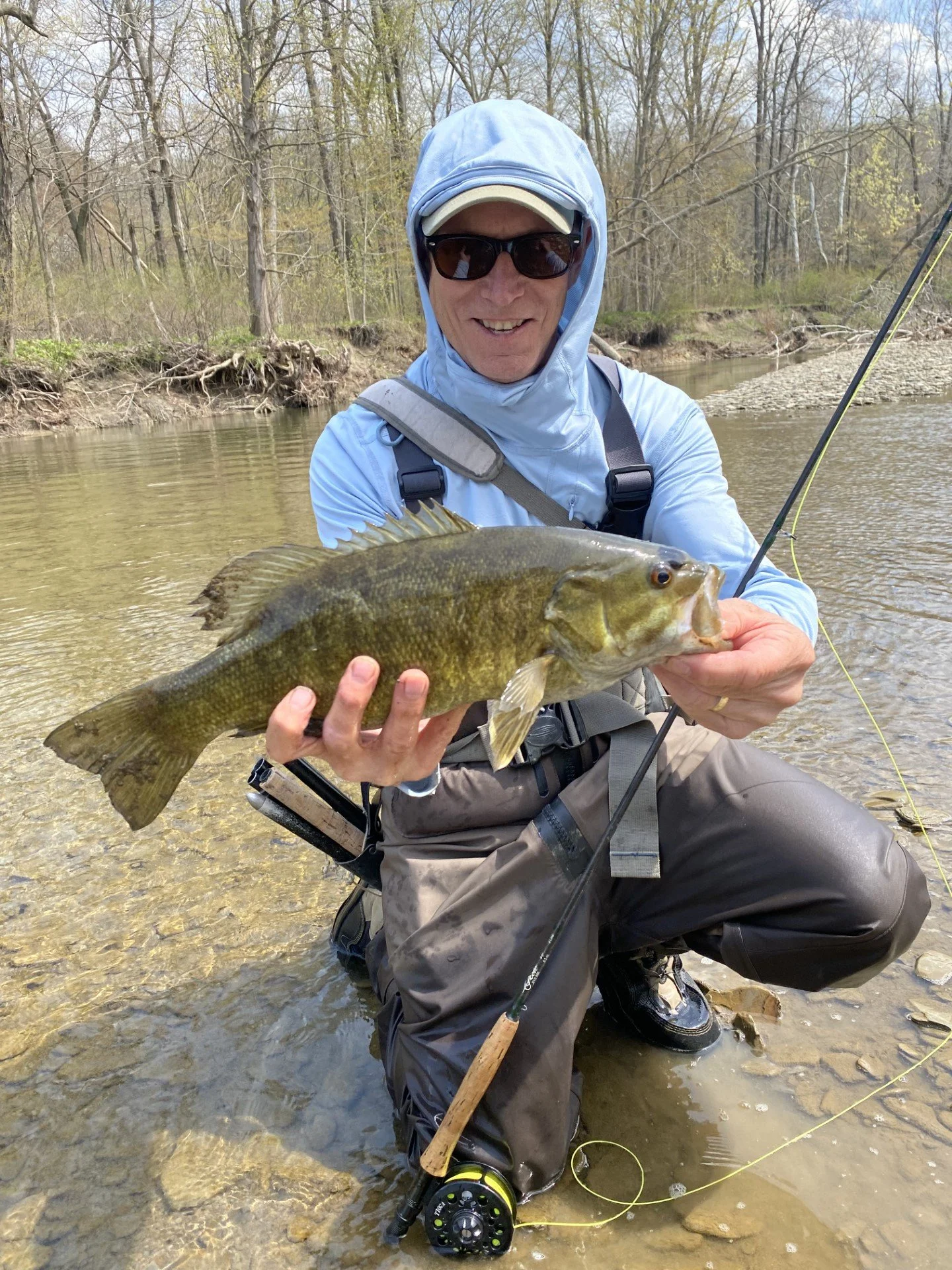
Smallmouth Bass
In late spring, steelhead share the streams with a subset Lake Erie’s smallmouth bass population that migrates into the tributaries in search of spawning grounds, creating a unique opportunity for anglers to access the large lake-dwellers without the use of a boat. Little is known about this phenomenon, but research is beginning to shed light on the behavior of these migratory fish. Studies led by Zak Slagle, a fisheries biologist for the Ohio Division of Wildlife, have detected the presence of lake run smallmouth (averaging over 17 inches in length) in Erie tributaries from late March through mid-June. According to Slagle, their migrations are likely dependent on river temperatures and flows, with high-water events triggering fish to enter and exit the rivers. Slagle’s data also indicates that some smallmouth can travel quite a distance upstream, but higher concentrations of fish are likely found in the lower reaches.
Having just entered shallow streams from the relative safety of the main lake, smallmouth can be hyper-sensitive to their surroundings and relate heavily to cover. This is especially true when the water is clear and the sun is high. Finesse presentations, namely muted or undersized flies fished slowly around shaded areas and structure, can be effective here. Additionally, identifying and targeting potential spawning grounds, slack-water areas with pea gravel or silty bottoms, is high-percentage angling. Smallmouth often respond positively to erratic retrieves that incorporate long pauses, but anglers should vary retrieves until one proves effective, and then seek to mimic that cadence until it fails to produce. Twitching and pausing a craw imitation as it swings along the river bottom is a deadly method that appeals equally to both smallmouth and steelhead.
Tactics
The angler wishing to target both species must understand the timing of the two distinct runs and fish the window in which they overlap. While the weather is the determining factor, steelhead and smallmouth generally share the streams in April and early May. Selecting productive water during this time is key, and steelhead are found in the greatest numbers in those tributaries which are stocked by Ohio, Pennsylvania, and New York. Smallmouth bass, being native and naturally-reproducing, can turn up in any Lake Erie stream. Your best bet is to become familiar with the USGS gauges and identify the stocked tributaries with stable water temperatures and the most favorable flows on the day you wish to fish. Ideally, you’ll find a river that’s still a bit high, but dropping on the heels of a rain event. Both species are triggered to run when flows rise, so the odds of finding fresh fish are higher at this time. Higher flows also bring dirtier water which can positively impact the fishing, as fish may feel less exposed and eat more readily.
Start casting as close to the mouth as public access will allow and work upstream, thoroughly fishing depth and structure for smallmouth and the heads and tailouts of pools for steelhead. The unpredictability of smallmouth runs, coupled with the sporadic distribution of late-season steelhead, necessitates efficiency to cover water quickly, and a handful of unanswered casts into a high-percentage zone tells the angler it’s probably time to move on. Re-locating to another stream is not uncommon or unwise if you cannot locate fish. Trib-hopping is a common practice in the alley, and it greatly increases your chances of intercepting larger pods of fish.
Gear and Flies
Eleven-foot switch rods in weights of 5, 6, or 7 can be used to swing flies, and when paired with a short Skagit head, are powerful tools for delivering payloads long-distance and covering wide sections of water where minimal back casting room exists. Seven and eight-weight single hand rods in lengths of 9 feet are more versatile, however, when fished with floating or intermediate lines. These setups are equally well-suited to strip, swing, and drift flies, all of which may be required throughout the course of a day. Flourocarbon leaders as light as 12 pound test work well, with lengths determined by water clarity. Few pieces of gear are as critical as the fly itself, and the well-prepared angler totes a variety of flies with different weights, profiles, colors, and actions. Patterns mimicking emerald shiners and gobies are good bets, as these are staple food items for Lake Erie predators. Fly selection can be guided by the angler’s preferred target species, but many flies appeal equally to smallmouth and steelhead. Wooly Buggers, craw imitations, Feather Gamechangers, Mini Sex Dungeons, and Circus Peanut variations are great single-hand flies, while Hoh Bo Speys, Intruders, Dirty Hohs, and Hot Head Triple Tails serve as spey options. Water conditions should dictate fly color with earth-tones and naturals winning out in clear water, and flashy, bright, and high-contrast flies used when the water is stained.
Late Spring in the Alley
Late spring truly is a special time in the alley. Leaves are budding on the trees, flowers are blooming, and crisp mornings give way to warm afternoons. The lower rivers teem with life, and the mild weather makes fishing comfortable, a welcome change after a long winter of lethargic fish and freezing hands. Warmer temps have fish charged up and ready to slam flies, and the streams are relatively empty, as many fishermen give up the chase when most of the steelhead have spawned. This unique window, one that sees the overlapping runs of two incredible species, offers the chance of landing a trophy on every cast. It doesn’t last long, though, so watch the weather, keep an eye out for rumors and reports, and give yourself a shot at a day you’ll never forget.